Part I of VII3 min read
The last mechanical step
Every computer, however capable, still waits for a human body to do something a sensor can register. That wait is now the slowest part of the system.
Somewhere tonight, a system that can draft a contract or re-plan a shipping route in seconds is doing nothing at all. It is waiting for someone to finish typing.
In a hospital ward, a woman who has had a stroke knows exactly what she needs to tell the nurse. The sentence is complete. It has no way out.
On a crowded train, a man has a message he would rather nobody overheard. He could say it in two seconds. He thumbs it out in forty.
An idle machine, a silenced patient, a self-conscious commuter. In each case the intelligence on either side is not the limit. The channel between them is.
Computing has an input problem, and it is older than computing.
One instruction, four ways across
The same intent can reach a machine by different physical routes. Each route asks something different of the body, and each stands on different evidence.
Move Thursday’s review to Friday→ Machine action
Keys and touch
Mechanical input- Put it into words
- Move fingers
- Device registers contact
- Text arrives
Hands and eyes occupied. Visible to anyone watching.
Voice
Expressive input- Put it into words
- Breath, larynx, mouth
- Sound crosses the room
- Speech recognised
Hands free. Audible to everyone nearby; needs a voice.
Silent articulation
Biosignal input · peripheral, not brain- Put it into words
- Mouth the words, no sound
- Muscle or motion sensor
- Decoder proposes text
Private and quiet. Still a deliberate movement; accuracy is vocabulary-dependent.
Neural measurement
Neural input- Attempt to speak or write
- Cortical activity changes
- Implant or scanner records
- Decoder proposes text
Needs no working muscle. Best results today require surgery or a shielded room.
A century of asking the body for less
The history of the interface is a history of who does the translating. With punched cards, a person turned intent into holes, in advance, in the machine’s format. The command line let them type that format live. Windows replaced syntax with pointing. Touch removed the pointer. Voice removed the screen. Language models removed the last of the machine’s grammar: you can now say what you want in your own words and be understood.
Step by step, translation moved from the human to the machine. Transmission did not move at all. Every one of those interfaces still needs a hand that travels or a voice that carries.
What the human had to do
Each interface era cut the translation a person must perform. None, so far, has removed the need for an observable physical act.
Punched cards
Encode the request as holes, ahead of time.
The machine’s format, the human’s labour.
Visible actCommand line
Type exact syntax, live.
Dialogue begins, in the machine’s language.
Visible actMouse and windows
Point at a picture of the thing.
Recognition replaces recall.
Visible actMulti-touch
Touch the thing itself.
The computer goes everywhere the hand goes.
Visible actVoice assistants
Say a short command aloud.
Hands freed; privacy lost.
Audible actLanguage models and agents
Describe the goal in your own words.
The machine finally learns our language.
Visible or audible actBiosignal and neural input
Intend it deliberately; the body barely moves, or does not.
Not shipped at scale. Evidence in Part II.
Unobserved act · proposed
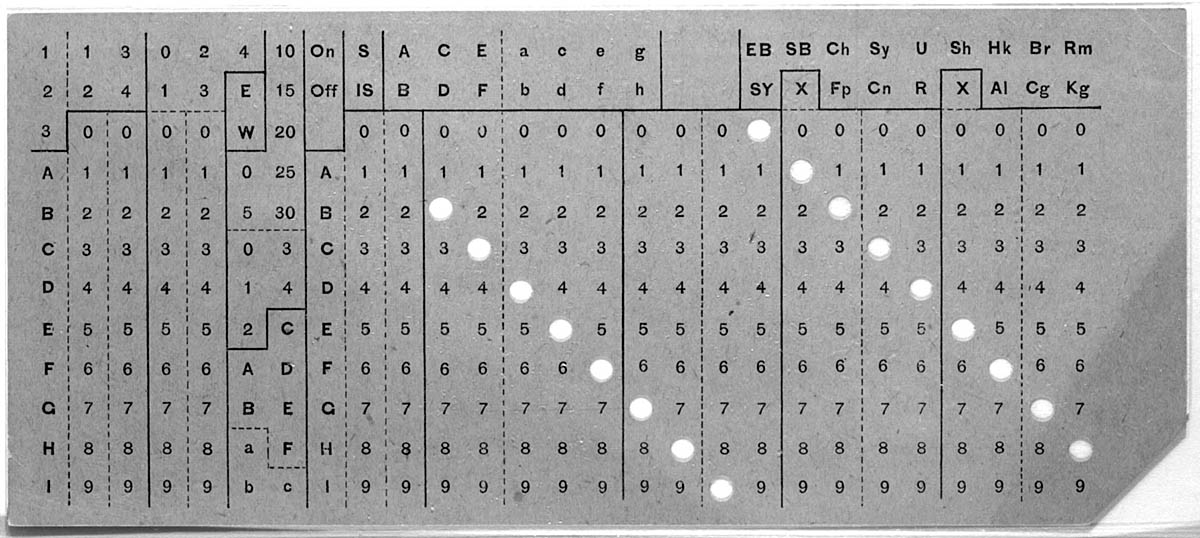 1890 · Punched card
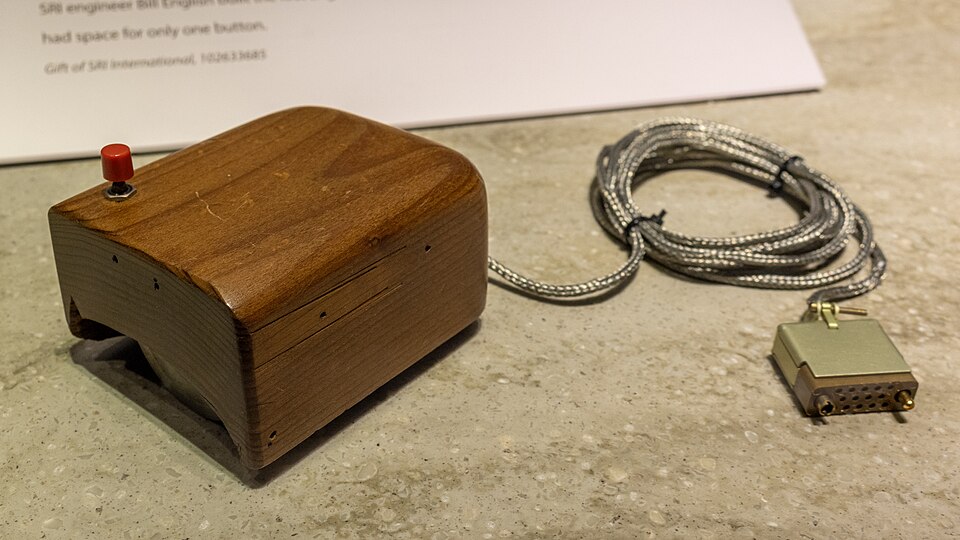 1964 · The first mouse (replica)
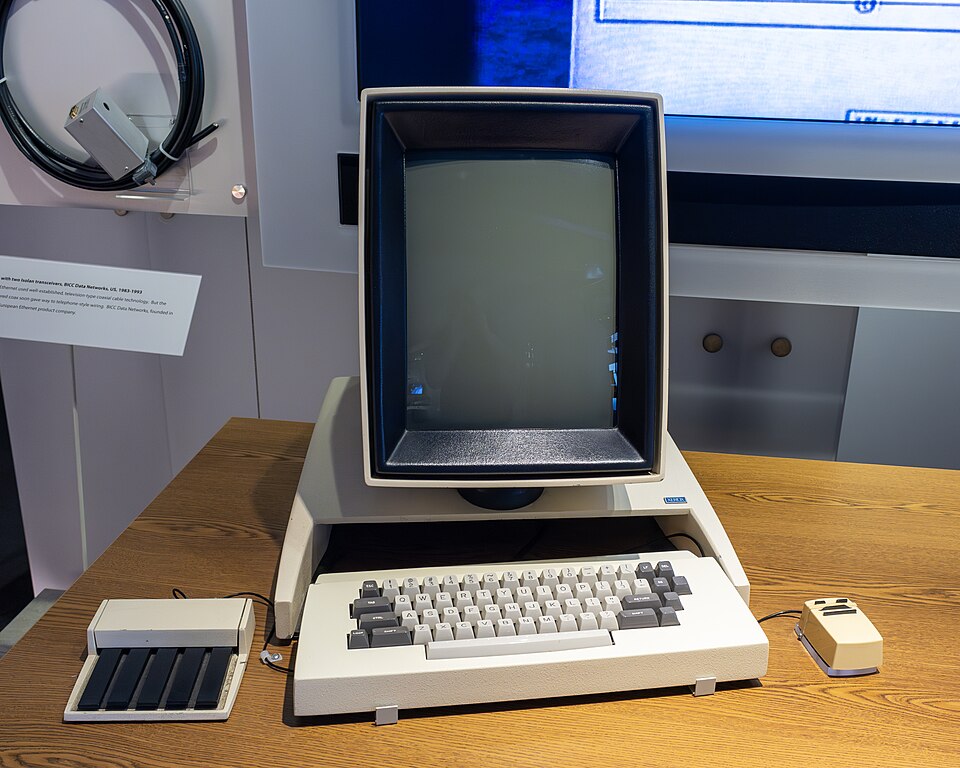 1973 · Windows and a pointer
The expression ladder
Sort inputs by what they ask of the body and four rungs appear.
- Mechanical. You act on an object: a key, a mouse, a pane of glass.
- Expressive. You act as you would toward a person: speech, gesture, gaze.
- Biosignal. A sensor picks up the body preparing an act, such as a muscle firing, without the act being seen or heard.
- Neural. An instrument measures the brain itself. This is a brain–computer interface, or BCI.
Each rung asks less of the body and is harder to make reliable. Rung three is not rung four. A sensor on the jaw reads muscle. It does not read mind.
Why climb? Because for some people the mechanical step is a wall: paralysis and stroke can leave language intact and its exits closed. Because speech is a broadcast, and much of what people want to tell a computer is not for the room. Because hands are often full. And because once software can act for us, the instructions and corrections we give it become the most valuable input in the system.
The ChatGPT moment for BCI
Not long ago, most researchers avoided the phrase “general intelligence” in print. It was a taboo. It now appears in corporate mission statements, and the world was wrong.
It was wrong in a particular way. In 2017 a paper introduced the architecture every large language model now uses, and almost nobody outside the field noticed. For five years the capability compounded in plain sight. Then a text box put it in front of the public, and the consensus about what machines could do collapsed in a season.
We think BCI today is where AI was in 2017.
Set the two histories side by side. In 2012 deep networks suddenly worked; in 2021 a paralysed man typed from his motor cortex. In 2017 an architecture arrived that could scale; today the first general models for brain data are being trained. In AI, the first large models and the first interface anyone could use followed within five years.
We expect the same order here, at a similar pace. BCI is a few years from its ChatGPT moment: the day a device with no surgery does something useful enough that millions of people put it on. Most people are underestimating that day for the same reasons they underestimated AI.
Download the full manifesto as a PDF
Setu Glasses · Setu Cap