2012 · NaturePeer-reviewed
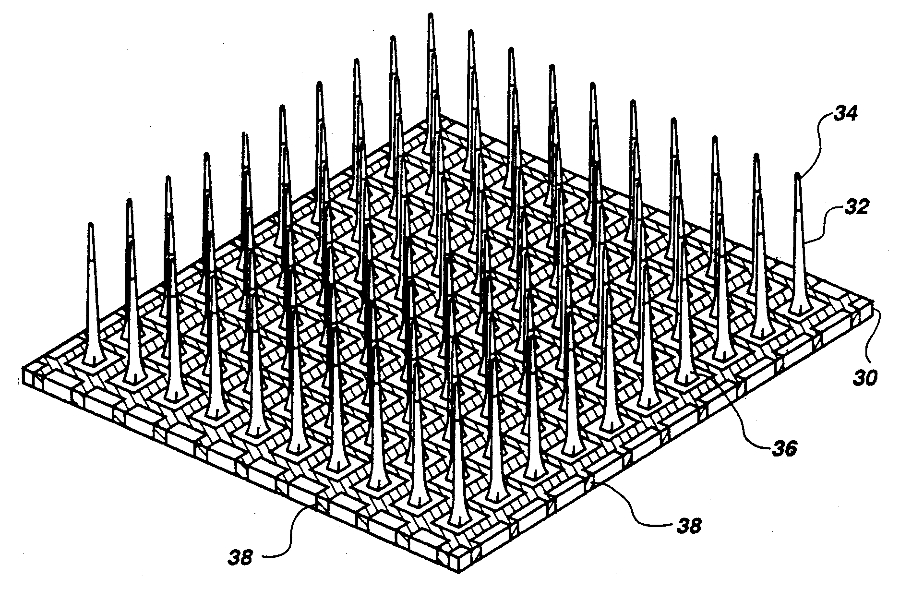
A robotic arm, steered from motor cortex
Signal: intracortical array · Verb: attempting to reach
3-D reach and graspTwo people with long-standing tetraplegia; one drank from a bottle unaided.
Did not show: speed or accuracy near able-bodied movement; use outside supervised sessions.
Details and source
- Tested
- 2 participants, 96-channel array
Handwriting without a hand
Signal: intracortical arrays · Verb: attempting to write
90 characters / min94.1% raw accuracy online; >99% offline with autocorrect.
Did not show: 90 words per minute; more than one participant; multi-year stability.
Details and source
- Tested
- 1 participant with spinal-cord injury
Touch, written back to the brain
Signal: intracortical recording + stimulation · Verb: attempting to grasp
20.9 s → 10.2 sMedian task time with a robotic arm, without and with evoked tactile sensation.
Did not show: rich or naturalistic sensation; writing of language or concepts.
Details and source
- Tested
- 1 participant with tetraplegia
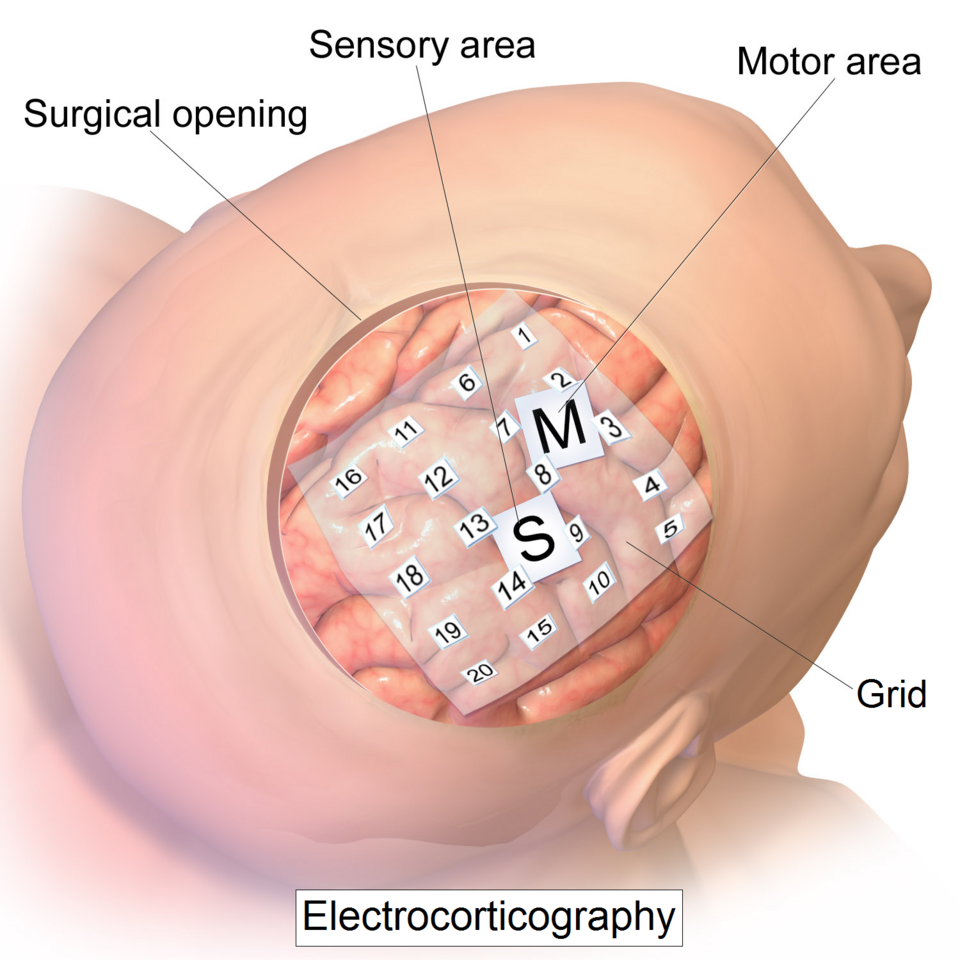
Speech, voice and a face from the cortical surface
Signal: ECoG grid · Verb: attempting to speak
Median 78 words / minMedian 25% word error rate; text, synthetic voice and avatar.
Did not show: error rates low enough for unassisted daily use; decoding of unattempted thought.
Details and source
- Tested
- 1 clinical-trial participant with severe paralysis
Large-vocabulary speech from single neurons
Signal: intracortical arrays · Verb: attempting to speak
62 words / min23.8% word error on a 125,000-word vocabulary; 9.1% on 50 words.
Did not show: conversational accuracy (see 2024); results beyond one participant.
Details and source
- Tested
- 1 participant with ALS
A speech prosthesis used for months
Signal: intracortical arrays · Verb: attempting to speak
97.5% word accuracySustained over 8.4 months; ~32 words / min; 248+ hours of self-paced use; 30-minute first calibration.
Did not show: generalisation across patients; performance without ongoing recalibration.
Details and source
- Tested
- 1 participant with ALS, 256 electrodes
Inner speech, and a lock for it
Signal: intracortical arrays · Verb: imagining speech
Imagined sentences, real timeInner speech is represented in motor cortex; some unprompted inner speech was decodable; safeguards blocked it.
Did not show: decoding of arbitrary private thought; anything outside implanted motor cortex.
Details and source
- Tested
- 4 implanted participants
The gist of a story, from blood flow
Signal: fMRI · Verb: listening (also imagining, watching)
Meaning, not wordsGenerated word sequences that recover the sense of heard speech.
Did not show: word-for-word transcripts; decoding without the person’s cooperation, which was required to train and to apply the decoder.
Details and source
- Tested
- 3 participants, ~16 hours of scanning each
Rebuilding a viewed image (MindEye)
Signal: 7-tesla fMRI · Verb: looking at pictures
Retrieval and reconstructionIdentifies the viewed image among similar candidates; generates a resembling image with a diffusion model.
Did not show: imagined or remembered images; exact readout. The generator supplies detail the recording lacks.
Details and source
- Tested
- 4 participants from a public dataset,29 tens of hours each
A new brain with one hour of data (MindEye2)
Signal: 7-tesla fMRI · Verb: looking at pictures
~1 hour to adaptAfter pretraining across 7 other people in the same dataset.
Did not show: zero-calibration transfer; transfer across scanners, tasks or to portable sensors.
Details and source
- Tested
- Held-out participants within one dataset
Short video from a scanner (NeuroClips)
Signal: fMRI · Verb: watching video
Clips up to 6 s at 8 fpsResembling the watched footage, via a pretrained text-to-video model.
Did not show: a live feed, imagined scenes, or frame-accurate recovery.
Details and source
- Tested
- A public fMRI–video dataset
Typed sentences from outside the skull (Brain2Qwerty)
Signal: MEG and EEG · Verb: typing memorised sentences
32% vs 67% character errorAverage for MEG vs EEG. Best MEG participants: 19%.
Did not show: free-form thought to text. Participants were physically typing; EEG got two characters in three wrong.
Details and source
- Tested
- 35 healthy volunteers
More data, fewer errors (Brain2Qwerty v2)
Signal: MEG, real time · Verb: typing natural sentences
39% word error rateAverage; improves log-linearly with data. Best participant: half of sentences with at most one wrong word.
Did not show: anything wearable (MEG needs shielding); peer review is pending; ~10 hours of recording per person.
Details and source
- Tested
- 9 participants, 22,000 sentences
The same task on four machines
Signal: EEG, MEG, 3T and 7T fMRI · Verb: looking at pictures
498 hours, 84 peopleThe most precise devices decode best. No plateau with more data. Hours per person matter more than more people.
Did not show: where any device’s ceiling lies; anything about language or intent.
Details and source
- Tested
- 8 public datasets, 2.3 million brain responses
A voice for silently mouthed words
Signal: facial surface EMG · Verb: mouthing words silently
64% → 4% word errorClosed-vocabulary condition. Open vocabulary: 88% → 68%.
Did not show: brain decoding of any kind; usable open-vocabulary accuracy; multi-speaker generalisation.
Details and source
- Tested
- Single-speaker dataset, wet electrodes
A wristband that works on strangers
Signal: wrist surface EMG · Verb: gesturing and handwriting
20.9 words / minHandwriting, with no per-user calibration; +16% with personalisation.
Did not show: speech or brain decoding. Requires functioning hand muscles.
Details and source
- Tested
- Models trained on thousands of consenting participants
- Source
- CTRL-labs at Reality Labs19